en
 de
 jp
 kor
 fra
 spa
 ru
 pt
 it


Melting Point of Metals in Manufacturing
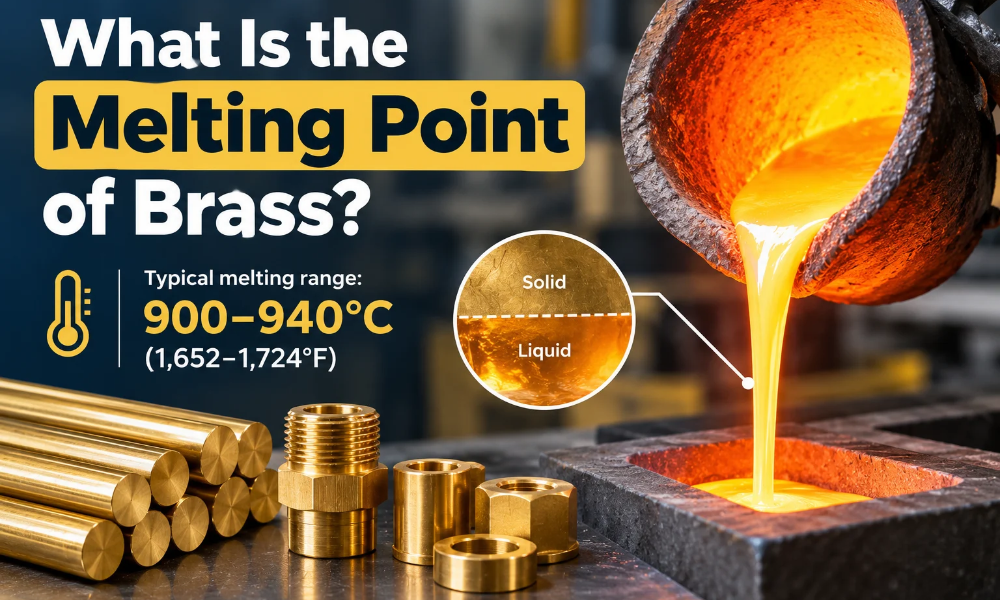
When designing manufacturing processes, the selection of melting point of metals, production methods, energy consumption and quality of the products and their performance properties are all influenced by the melting temperature of the metal used. Each metal will have a different melting point from solid to liquid and it is important to know these (thermal) properties before embarking on a manufacturing project. Every metal possesses its own properties and is suitable for different applications in the industry, such as aluminum, copper, iron and tungsten. This article discusses some of the common metal melting temperatures, provides an easy-to-read chart of values, and outlines the differences in metal melting points and their impact on the manufacturing process, such as metal injection molding (MIM). It also includes helpful hints on selecting the appropriate material for a successful and productive manufacturing.
What Is the Melting Point of Metals?
A solid material's melting point is the temperature at which it turns into a liquid at a particular pressure. This property is useful when considering the behaviour of materials during heating, shaping and manufacturing processes when discussing metals. The question "what is the melting temperature" is particularly important when considering the choice of materials in industrial applications. The melting point is usually well defined for a pure metal and may be a range of temperature for alloys. This includes the solidus temperature, which is the temperature at which melting begins and the liquidus temperature at which the material is completely molten. This knowledge facilitates the selection by manufacturers of the most appropriate material, and the setting of the process conditions.
Why Metal Melting Temperatures Matter in Manufacturing
The melting temperature of the metal affects choice of equipment, energy use, rate of production and control of the process. Unless a manufacturer can determine how a material will react to heat, he cannot select a manufacturing process. For instance, casting entails the state of the metal being liquid and welding necessitates localised melting of the base metal to form the weld. Brazing is a technique which joins parts using a filler metal that will melt but not generally melt the base materials. Metal injection molding involves combining the metal powder with a binder material, forming the mixture into the desired shape, removing the binder, and finally, sintering at a controlled temperature. The conventional sintering process takes place usually at a lower temperature than the melting point of the metal. When choosing materials for precision parts, the manufacturer will need to take into account factors such as strength, corrosion resistance, machinability, dimensional stability and overall manufacturing costs (apart from heat resistance).
Melting Point of Metals Chart: Common Metals and Their Temperatures
A metal melting point chart can help you to compare and contrast the melting points of common metals. The values are used to provide engineers, designers and manufacturing teams with information about the thermal properties of materials, prior to choosing a material for a specific application. Some common metals and their approximate melting points in Celsius and Fahrenheit are listed below: Pure iron, aluminium, copper, nickel, titanium and tungsten are suitable reference materials, and to the cast iron, which requires special considerations since the melting interval will depend on the composition. These are only guideline numbers; they are not definite production numbers. Processing requirements, alloy grade and purity may cause actual temperatures to vary.
Metal | Approx. melting point (°C) | Approx. melting point (°F) |
Tin | 232 | 450 |
Zinc | 420 | 788 |
Aluminum | 660 | 1,220 |
Silver | 962 | 1,764 |
Gold | 1,064 | 1,947 |
Copper | 1,085 | 1,985 |
Nickel | 1,455 | 2,651 |
Pure iron | 1,538 | 2,800 |
Titanium | 1,668 | 3,034 |
Tungsten | 3,422 | 6,192 |
The other benefit is that viewers could compare metal melting temperatures when evaluating their use in industry while analyzing this metal melting points chart. If a single value is used, manufacturers should check the alloy being used for these specifications as, for instance, cast iron and stainless steel are different alloys with different values. Other variants such as metal melting temp chart, melting temperature of metals table and metal melting temperature chart and melting points for metals can be used for the same reference type of material.
What Is the Melting Point of Iron?
It is a useful reference point for the thermal properties of ferrous metals as the melting point of pure iron is about 1,538°C (2800°F). When people ask the question "what temp does iron melt?" they are not always referring to the melting point of iron. Cast iron has a higher carbon content than most steels, and the range of melting of cast iron varies according to the composition of the iron. The key difference between steel grades is also in the amount of carbon or alloying elements contained in the steel. These differences affect the behavior of the iron based materials when they are cast, welded and subjected to other high temperature processes. A pure specimen of steel, for example, is not the same as a pure specimen of cast iron or iron and manufacturers should therefore differentiate between the melting temperature of pure iron and steel and that of cast iron when comparing melting temperature or choosing the material for industrial components.
Which Metal Has the Highest Melting Point?
Tungsten is the metal with the highest melting point of about 3422°C (6192°F) among the pure metals. It can also be used in special applications such as some furnace parts and equipment for high temperatures because of its resistance to extreme temperatures. Tantalum, molybdenum and rhenium are other metals that have high melting points. When the requirements for ordinary metals are very high, these materials are often considered. But the melting temperature of a metal is not the only criteria for choosing the best metal for every project. Materials that can be used at high temperatures are costly, not easily formed, or not appropriate in applications where low weight or ease of machining is a consideration. Care should be taken in the selection of materials that will offer a balance of thermal performance and mechanical properties, manufacturing requirements and cost.
Factors That Affect the Melting Temperature of Metals
The suitability of metals for manufacturing depends on a number of factors, one of which is the melting temperature. One of the most important chemical compositions is that they may alter the melting characteristics of a pure metal when added to it. For instance, carbon and other elements added to steel and cast iron have an effect on the melting range of these metals. Under certain conditions, the melting point may be affected by pressure and impurities can significantly affect melting behavior. The solidus and liquidus temperatures are useful for alloys in determining the melting range between the beginning of melting and total liquefaction. Another important consideration is heat treatment, but this is not a typical change in the equilibrium melting point effected by a change in composition. A general metal melting temperature chart is not sufficient for manufacturers to rely on; grade-specific technical data should be used.
How Melting Points Affect Different Manufacturing Processes
Manufacturers use the melting point of a metal to decide on appropriate methods of making, the amount of heat needed and the type of equipment to use. The operating temperature depends on the type of manufacturing process that is being used, and is therefore not only a function of the melting point.
Metal Casting and Foundry Work
Metal casting is a process of pouring a molten material into a mold. The necessary temperature will depend on the liquidus temperature of the metal, the mold design, the metal losses, and the flow characteristics desired. By maintaining the correct temperature, defects and component quality can be reduced. Oxidation, solidification time and material behavior during cooling are also factors that must be taken into consideration by the manufacturers.
Metal Injection Molding (MIM)
This metal injection molding process can be used to manufacture some of the smaller complex metal parts in repeatable quantities. The technique involves mixing a fine powder of the metal with a binder to form a feedstock which can be shaped into the required form. The binder is then removed from the molded part and the part is sintered at a controlled high temperature. In the conventional MIM sintering, the sintering is done at a lower temperature than the melting point of the metal, so that the particles get bonded together and can make up a dense component. Material compatibility, shrinkage, dimensional tolerances and final mechanical properties are all important factors in successful production.
How to Choose the Right Metal for Your Manufacturing Project
The melting point metals chart and the ability to endure the greatest amount of heat is not the only criteria required to select a metal. The operating temperature, necessary strength, corrosion resistance, weight, surface finish, dimensional tolerances, and volume of the components to be produced should be considered. Aluminum could be an option for lighter parts and stainless steel may be a viable choice if there is a need for corrosion protection. Tungsten could be used in specialized high temperature applications when its properties are deemed to be of great importance and the processing difficulties and extra processing costs are acceptable. If the material and component geometry is appropriate, metal injection molding can provide design flexibility and repeatable production of intricate parts. Early technical data sheets review and discussion on manufacturing requirements can help minimize material waste, production issues and unnecessary costs.
How Harber MIM Supports Precision Metal Component Manufacturing
The choice of material plays a crucial role in ensuring the reliability and accuracy of metal parts. Harber MIM offers a timely introduction for anyone interested in metal injection molding and precision manufacturing solutions. Manufactured components must take into account the material's thermal properties along with their geometry, strength, dimensional requirements and the environment in which they will be operating. If design and material are suitable for the manufacturing method, then the use of a suitable manufacturing method can help the achievement of a complex shape and consistency of results. The readers can go to Harber MIM to find out more about its metal injection molding (MIM) and precision component manufacturing capabilities and consider potential solutions for their projects.
FAQ:
Which metal has the highest melting point?
The melting point of tungsten is about 3,422°C and is the highest of pure metals. It is utilized in special applications where particular heat resistance is needed.
Do all metals have a fixed melting point?
In general, pure metals have a sharp melting point at a particular pressure. Most alloys have a range of melting temperatures (not a single one), starting at the solidus temperature, and ending at the liquidus temperature.
Why is the melting point important in manufacturing?
The melting point of a material is useful to the manufacturer in understanding material behavior when subjected to casting, welding, and other thermal processes. It is also helpful in selection of materials and process planning, but other properties also need to be taken into account.
Conclusion
This knowledge of the thermal effect of various metals is also used by manufacturers to make decisions regarding the melting point of metals and production. The selection of the appropriate manufacturing process, whether casting or welding and precision metal injection molding, will depend on the composition of the material, its intended use, mechanical properties and manufacturing requirements. While it's good for initial comparisons, a reliable chart is always useful and engineers should always verify the specification of the exact metal grade before production. Taking all of these into account simultaneously will enable manufacturers to enhance process control and ensure component quality while providing viable solutions for projects. If the precision parts are complex, it may be prudent to investigate appropriate manufacturing processes using Harber MIM.