en
 de
 jp
 kor
 fra
 spa
 ru
 pt
 it


What is Brass?A Complete Guide to Brass Material
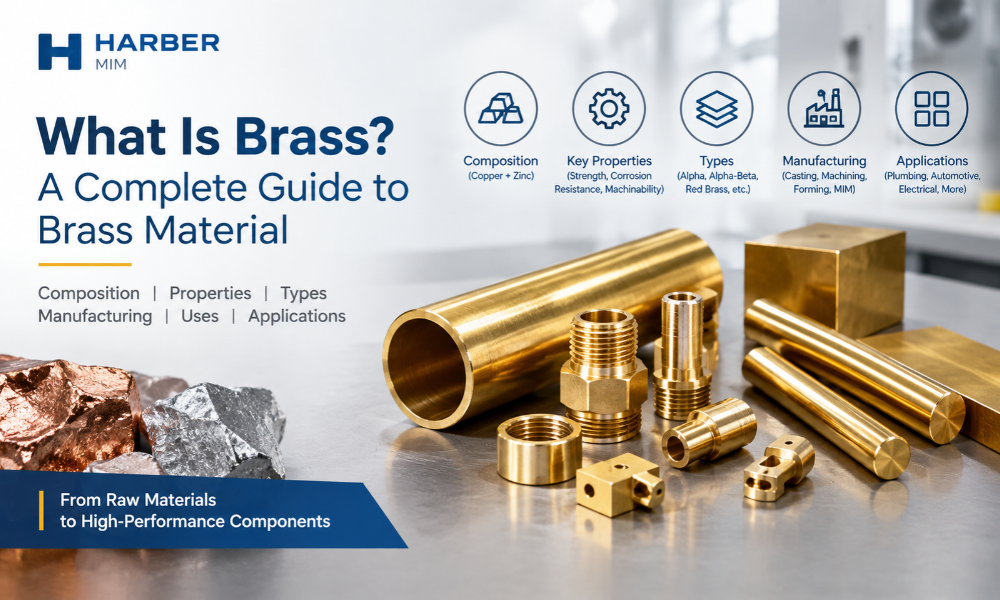
Explain brass, its composition and uses, as it is a copper alloy consisting mainly of copper and zinc. Describe its applications in the plumbing, electrical, automotive and decorative industries and in industry. Describe a little about its composition, properties, types, methods of manufacture and uses. Introduce the main key word what is brass and explain why it is important to know about this material when choosing a metal for making and engineering products.
What Is Brass Made Of?
Discuss the composition of brass, and describe the effect on its strength, resistance to corrosion, ability to be cut and the effect on its appearance. Explain that copper and zinc are its two significant constituents, with a few alloys of brass having other constituents to modify the properties. Explain, that their proportions can be different for different applications.
Is Brass a Metal or an Alloy?
Describe brass as an alloy of metals. Explain how Cu and Zn mixed together make a material with properties different to both of the elements. Make a quick comparison between brass and bronze, which is generally made out of copper and tin, so that readers can get an idea of what the differences are. Directly and technically correctly answer questions about "is brass metal", "brass is a metal", "what type of alloy is brass" and "what alloys are in brass".
Key Properties of Brass Material
Explain some of the physical and mechanical properties which enable brass to be used for various manufacturing processes. Relate the following property to its corrosion resistance: They can be machined, elastic, ductile, formable, cannot conduct heat and electricity well, does not look good and is strong. Refer to the students, explaining that the properties are different when made at different grades and make. Remind students that brass may be used in various conditions, but sometimes the brass will selectively corrode (dezinicification) and sometimes the brass will crack from stress (stress-corrosion cracking). Guide readers on the rationale behind engineers' evaluation of an o/e and the operating environments and performance requirements before they select a particular brass grade.
What Are the Different Types of Brass?
Introduce the main brass groups and their effect of composition and microstructure on their properties and applications. These can be alpha brass, alpha-beta brass, red brass, free-machining brass, naval brass and cartridge brass. Describe the characteristics of the Alpha Brasses, Alpha-Beta Brasses and Free-Machining Brasses. Examine common uses for each type of product, including plumbing, marine hardware, fasteners, decorative products and drawn products. Add in variations like kinds of brass, type of brass, type of brass, brass grades and examples of brass, of course.
Type of brass | Main characteristics | Common applications |
Alpha brass | Good cold formability | Sheets and decorative parts |
Alpha-beta brass | Good strength and hot workability | Valves and fittings |
Red brass | Copper-rich composition | Plumbing components |
Free-machining brass | Efficient machining | Screws and precision fittings |
Naval brass | Suitable for selected marine environments | Marine hardware |
Cartridge brass | Good ductility and formability | Drawn components |
How Is Brass Produced and Manufactured?
Discuss the steps involved in converting raw material to finishing product of brass. Explain the selection of Copper, Zinc and required alloying element followed by the controlled melting and alloying. Describe the process of the molten alloy casting into ingots, billets or other types of stock for further processing. The manufacturing can be by rolling, extrusion, drawing, forging, stamping, casting or machining, depending on the product. The student will complete the discussion on surface treatment and quality inspection including chemical composition, dimensions and mechanical properties. Explain that the manufacturing process is dependent on the component design, tolerances, the number of components required and the purpose of the component.
Brass Metal Raw Materials and Manufacturing Methods
Explain the principle raw material and common process of manufacture of Brass. Discuss how casting can be used to make shaped parts, machining can be used to make precision features and that the forming processes can be used to make sheets, tubes, etc. of various shapes. Explain how the manufacturers select it, depending on the complexity, the amount of waste material, cost and the requirement of production. Add in variations of the keyword, such as brass metal raw materials, how is brass produced, and manufacturing of brass, but don't overuse the same words in the same way as you might be tempted to.
What Are the Common Uses of Brass?
Describe the applications of brass in various industries due to its properties of corrosion resistance, easy to machine, good strength, conductivity and beauty. Discuss plumbing parts (taps, valves and pipe fittings), electrical parts (terminals, contacts), automotive parts (fits and connectors), parts for industry (fasteners, bushings and instrument parts), decorative hardware and selected musical instrument parts. Discuss the factors of the working environment and the required performance which determine the best grade. Of course, use numerous variations of the search term, like uses of brass, uses of brass metal, brass uses, brass uses, uses for brass, use of brass, application of brass, and uses brass.
What Are Brass Components?
Identify brass components as finished or semi-finished products produced using brass for use in mechanical, electrical, plumbing and industrial types of work. Explain threaded inserts, precision fittings, electrical terminals, connectors, bushings and mechanical hardware. Discuss the various factors affecting the selection of components such as dimensions, tolerances, strength, resistance to wear, exposure to corrosion, surface finish, quantity and cost of manufacture etc. Demonstrate how a suitable alloy and manufacturing process can enhance product reliability and efficiency in manufacturing. Use naturally and naturally brass parts.
What Is Machinable Brass?
Identify and explain "machinable" grades of brass chosen for ease of cutting and material removal. Explain the effect of some alloy compositions on the chipping production, cutting speed, tool wear, surface finish and overall production time. Explain the common application of it in screws, fasteners, threaded parts, precision fittings and turned components. Remind the public regarding the availability of lead-free alternatives and potentially the need for some uses of drinking water, consumer products or regulated uses. Explain the importance of manufacturers selecting the correct grade, depending on the Machining Performance, Safety Requirements, and Operating Conditions of the final component produced.
Brass MIM and Copper Metal Injection Molding
Explain the manufacturing process known as Metal Injection Molding (MIM) which is a process using fine metal powders together with a binder, which are then shaped into the desired shape, but later on, the binder is removed and the powdered metal is sintered. Elaborate on its potential applications to manufacture small and complex parts in large quantities. Discuss separately about brass and Copper Based MIM as material behaviour, material processing and economical considerations of both may differ.
● Brass MIM: Discuss the possible difficulties regarding processing and economics of using brass in some of the MIM processes due to its low melting temperature and requirement of sintering process. Before which material is specified, make sure it is compatible with the manufacturer.
● MIM Copper: Copper-based MIM is a potential option for the selected components requiring thermal or electrical conductivity (dependent on the capabilities of the alloys and processes).
● Copper Metal Injection Molding: Discuss the process as a means of manufacturing complex copper parts, if the design, desired properties and quantity of parts warrants injection molding.
● Choosing a manufacturing method: MIM vs. Machining, Casting and Forming – considering the complexity of the parts, dimensional requirements, material performance, quantity of the production, and the cost.
Relate the talk to Harber's metal injection molding skills, but don't state that Harber can make brass MIM unless it is known to be true. Elaborate on the fact that choosing a material and/or process should be related to the needs of the particular component.
Advantages and Limitations of Brass
Advantages | Limitations |
Good machinability in selected grades | Properties vary by grade |
Corrosion resistance in many environments | Some grades may undergo dezincification |
Attractive gold-like appearance | Can tarnish or discolor |
Useful strength and formability | Not suitable for every high-load application |
Supports several manufacturing methods | Cost depends on composition and processing |
How to Choose the Right Brass Grade
Great care should be taken when selecting the appropriate grade of brass to ensure that a product that reliably performs, is durable, and cost effective is produced. When a material is selected, manufacturers are advised to take into consideration such factors as its chemical composition, its strength, hardness, its ability to be easily formed, its resistances to corrosion, operating conditions under which it is used, production tolerances and production costs. The manufacturing process also influences the selection and there are different methods of manufacture such as machining, casting, forming and Metal Injection Molding (MIM) that have different advantages depending on the components design and the number of components required. Harber MIM has the metal injection molding expertise and material selection support necessary for businesses developing complex - high precision metal parts to compare to their application requirements to determine the appropriate solution. With the expertise of a manufacturing partner, businesses can make suitable choices about their materials, establish quality and component repeatability, and enjoy efficient production with the quality they need.
Why Choose Harber MIM for High-Quality Brass Material Components?
Discover how to gain product performance, durability, corrosion resistance and manufacturing quality advantages by choosing the proper brass material. This section will delve into how Harber MIM can help companies seeking dependable metal manufacturing solutions, particularly regarding material selection, precision engineering, and maintaining quality standards. Explain how its manufacturing knowledge can be applied to various industrial needs ranging from design of components to the final product quality. Whether you are looking for brass parts for industrial use or simply want to better understand the advantages of the different metal materials, an experienced manufacturing partner can make all the difference. Connect with Us Today about your project needs and find the ideal manufacturing solutions for the next application.
FAQ:
What is brass made out of?
Describe the composition of brass (copper and zinc with some grades containing other alloying elements to enhance particular properties).
What are the most common types of brass?
Explain the physical characteristics and uses of the various types of brass – alpha brass, alpha-beta brass, red brass, free-machining brass, naval brass and cartridge brass.
Can brass be used for Metal Injection Molding?
Describe the concept of suitability and its factors (alloy composition, process compatibility and production economics). Feasibility needs to be verified by manufacturers before using brass for MIM.
Conclusion
Give an overview of brass (a versatile Copper based alloy) – its properties, grades, manufacturing processes and applications in industry. Emphasize the importance of knowing its composition and how it will perform so that manufacturers can choose the right material to make reliable and cost effective components. Give a general overview of the different production requirement and choice of the machining, casting, forming and MIM. Don't mention the main keyword what is brass more than once in the conclusion.